
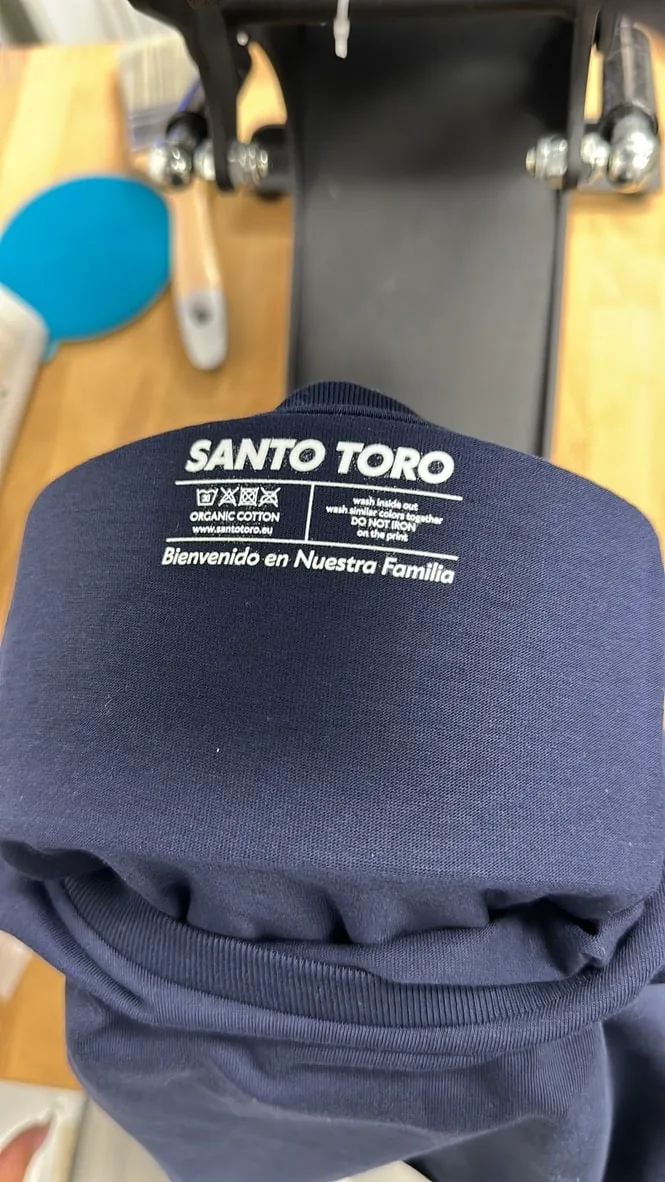
On this page
What is Direct to Garment?
Direct to Garment (DTG) is a digital printing process in which water-based inks are printed directly into the fibres of a garment. It supports many colours, gradients, small details and photographic artwork while keeping colour variations flexible in one digital workflow.
DTG performs best on cotton and cotton-rich fabrics. We assess the artwork, fabric composition, garment colour and quantity before production. For some polyester garments, large solid colour areas or other applications, Direct to Film may be the better technical or commercial choice.
Why choose DTG at AJDN?
production for brands and businesses.
Fine detail
Fine lines, illustrations, photographs and colour gradients are reproduced accurately on the garment.
Soft hand feel
The ink bonds with the fibres, creating a flexible and comfortable finish on suitable fabrics.
Flexible quantities
Suitable for samples, limited collections, personalised items and continuous on-demand production.
Personalisation
Names, numbers and artwork variations can be processed efficiently per garment or customer order.
Consistent quality
We monitor pretreatment, colour, placement, curing and final quality throughout the production process.
Fulfilment available
Combine DTG with neck labels, hangtags, packaging, stock management, dropshipping and worldwide shipping.
When is Direct to Garment printing the right method?
Direct to Garment printing is especially useful when artwork contains a great deal of detail and the project does not start with a very large production run. The design is processed digitally, so colour variations can be processed flexibly in one digital workflow. This makes DTG suitable for samples, capsule collections, personalised garments and ongoing production where artwork, sizes or order details can vary.
Cotton and cotton-rich garments
A smooth cotton surface absorbs water-based DTG inks evenly and helps reproduce fine detail. Garment weight, knit, colour and finishing still affect the result. We therefore assess the selected article and, where appropriate, produce a sample before releasing a complete production run.
Photography, illustration and gradients
DTG performs well with multi-colour artwork, transparent transitions, fine lines and photographic images. We check resolution, colour profile, transparency and final print dimensions. This prevents artwork that looks strong on screen from becoming too dark, soft or less powerful when printed onto fabric.
Samples, short runs and on demand
Digital garment printing allows a sample to be approved before production is scaled in a controlled way. Webshop orders can also be combined with neck labels, hangtags, packaging, inventory management and fulfilment, creating one connected process from blank garment to dispatched customer order.
A reliable DTG result starts before printing
We preferably receive a high-resolution PNG with a transparent background at the intended print size. PDF, AI or EPS files may also be suitable. Our team checks edges, small text, transparency, colours and usable dimensions before production. Dark garments normally require a white underbase to keep printed colours bright and accurate.
Pretreatment is adjusted to the garment colour and material. The item is positioned, the design is printed and the ink is cured using the appropriate combination of time and temperature. Position, colour, adhesion and finishing are checked before the garment is approved.
Ready to print your design with DTG?
Send us your artwork, preferred garments and quantities. We will review the files and recommend the best production method for your collection or campaign.
Request a DTG production proposal
Describe the garments, quantities, position, size and latest shipping date.
Direct to Garment for detail and flexibility
Print colourful artwork, fine lines and photographic designs directly onto garments. AJDN combines professional DTG production with quality control, personalisation and fulfilment.
- Ideal for small and medium production runs
- Water-based inks and a soft finish
- Production and fulfilment under one roof
Clear production facts before you enquire
Send a transparent PNG at final size and at least 300 dpi, or a suitable AI, EPS or PDF file, to info@ajdn.com.
New, unworn and unwashed
Customer-supplied items are possible after a technical check and are handled under the supplied-garment conditions.
Quote and planning
Pricing depends on size, colours and quantity. You receive a proposal beforehand.
All details: prices, lead times and conditions
DTG from €2 excl. VAT
- Starting price for printing only, based on a chest logo approximately 60 mm wide. The garment is charged separately.
Cotton and cotton-rich garments
- Best on 100% cotton, with no more than approximately 30% polyester. Pretreatment and required white ink are included.
Practical answers about production
- DTG starts at €2 excluding VAT for printing only, based on a chest logo approximately 60 mm wide. The garment is not included. Final price also depends on size, position, garment colour, ink use and quantity.
- DTG performs best on 100% cotton and cotton-rich garments containing no more than approximately 30% polyester. AJDN always checks fabric, colour and finish before production.
- The maximum printable area is approximately 40 × 50 cm. Front and back are the recommended positions; DTF is usually advised for sleeve and neck logos.
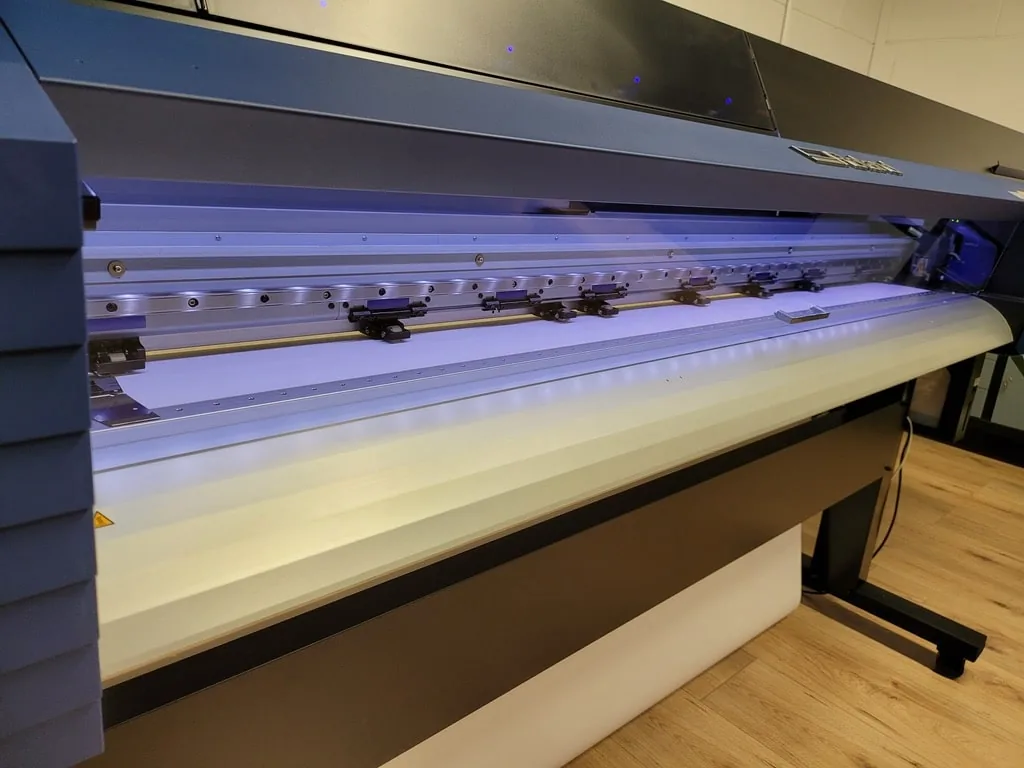
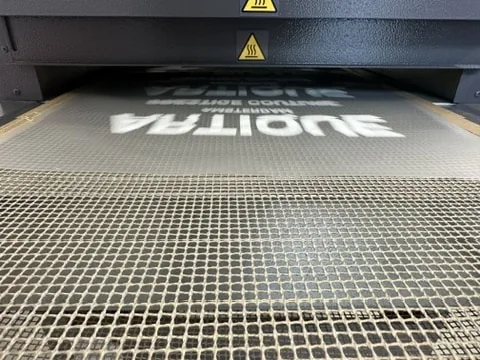
In pictures
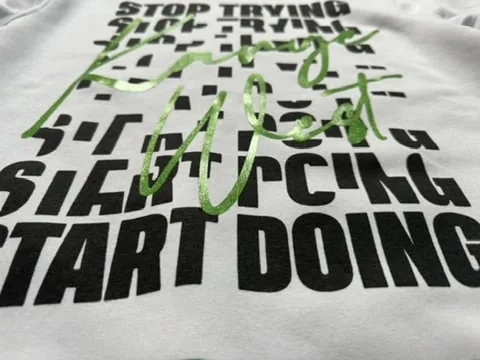
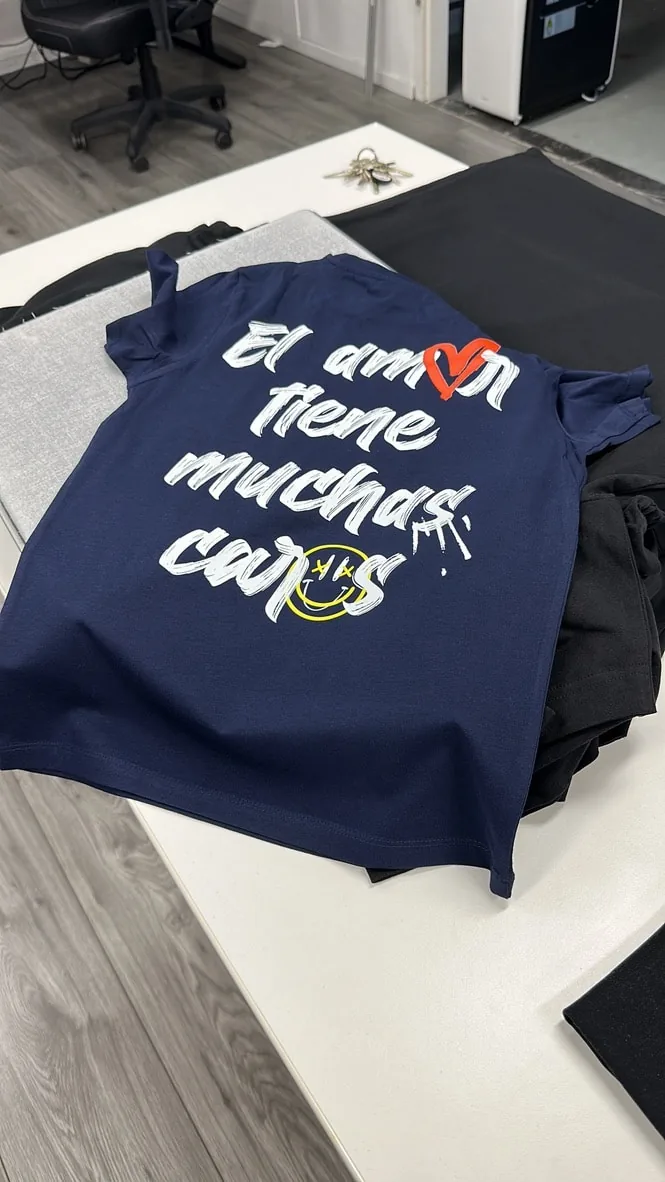
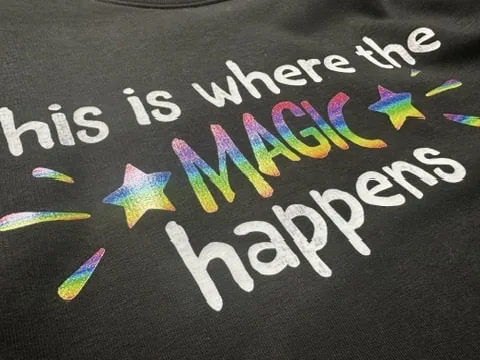
From an approved sample to repeatable orders
For a clothing brand, repeatability matters just as much as an attractive first print. We record relevant production information and compare repeat orders with the approved specification. Textiles remain a natural printing surface, so small differences in fibre, dye lot and ink absorption can influence the final appearance.
Wash printed garments inside out according to the care label, avoid aggressive bleach and do not iron directly over the design. For high quantities, synthetic materials or very solid blocks of colour, we compare DTG with Direct to Film or another technique so quality, lead time and cost match the project.
From design to production
Submit your request
Email info@ajdn.com or open the AJDN App. AI specialists are labelled as AI.
Artwork and garment
We check resolution, transparency, dimensions, colours and the suitability of the selected garment.
Pretreatment
Depending on fabric and colour, the garment is prepared for a clear and durable print.
Printing and curing
The design is digitally printed and carefully cured for consistent colour and adhesion.
Quality and fulfilment
After inspection, we can label, pack, store and ship the order directly to your customer.
Frequently asked questions
What is Direct to Garment printing?
With DTG, AJDN prints water-based ink directly into the fibres of the garment. It is suitable for full colour, fine detail, photographs and gradients.
How much does DTG printing cost?
Final price also depends on size, position, garment colour, ink use and quantity.
Which garments are suitable for DTG?
DTG is particularly suitable for cotton and cotton-rich garments. We assess your garment’s fabric composition, colour and finish before recommending the technique.
What is the maximum DTG print size?
The maximum print area depends on machine, garment and artwork. What fits your order is confirmed in the proposal.
Are pretreatment and white ink included?
Your proposal shows what is included in the print price, such as pretreatment and white ink, and what is charged separately.
How quickly does AJDN produce DTG orders?
Lead time depends on the order, artwork and schedule.
May I supply my own garments?
Yes, provided they are new, unworn and unwashed. Customer-supplied garments are assessed beforehand and processed under AJDN’s separate supplied-item conditions.
How should I supply DTG artwork?
Send artwork by email, not WhatsApp. A transparent PNG at final production size and at least 300 dpi is suitable; AI, EPS or PDF files can also be assessed.
How do I choose the right print technique?
It depends on artwork, fabric and use. Via info@ajdn.com or the AJDN App (AI specialists are labelled as AI) a concrete proposal follows.